

How to use the OKRs framework to drive focus, alignment, and execution in your startup.
As a founder, you’re living in a world of infinite ideas and finite resources. You have a dozen features you want to build, three markets you could enter, and a to-do list that never seems to shrink. The biggest danger isn't a lack of ambition; it's a lack of focus. As legendary VC John Doerr puts it, "Ideas are easy. Execution is everything."
So, how do you bridge the gap between your grand vision and the day-to-day execution required to make it a reality?
The answer lies in a simple yet powerful framework that helped transform a 40-person startup called Google into the tech giant it is today: Objectives and Key Results (OKRs).
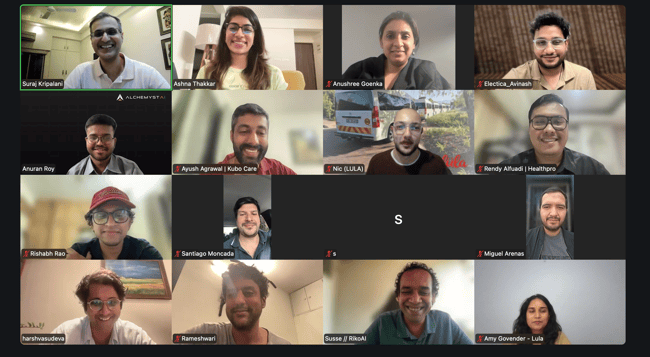
In a recent workshop for BonBillo's Impact Startup Accelerator, Suraj Kripalani, our Founder and CEO, broke down how this framework can bring strategic clarity to your startup. It's not just for big tech; it's a founder's best friend for turning chaos into a clear, actionable roadmap. Let's dive into what OKRs are, the golden rules for setting them, and how you can use AI to craft your first set in minutes, using a real-world example from our community.
The Big Idea: Why OKRs Matter for Startups
As Steve Jobs famously said, "People think focus means saying yes to the thing you've got to focus on. But that's not what it means at all. It means saying no to the hundred other good ideas that there are." OKRs are the bridge between your brilliant idea and the disciplined execution required to bring it to life.
The framework's power lies in its simplicity, tracing its roots from Peter Drucker's "Management by Objectives" (MBO) in the 1950s to Andy Grove's pivotal innovation at Intel in the 1970s. Grove added a crucial element: measurable Key Results. This transformed goal-setting from a static, annual exercise into a dynamic, quarterly cadence (or monthly). His protégé, John Doerr, then brought this system to Google in 1999 and authored the best seller 'Measure What Matters'.
For early-stage startups, OKRs aren't about managing a large organization; they're about survival and focus. They force you to answer two critical questions every quarter:
- Where do we want to go? (The Objective)
- How will we know we're getting there? (The Key Results)
By answering these questions, you create a culture of accountability and a clear roadmap for your team.
Deconstructing OKRs: The What and The How
At its core, the framework is beautifully simple. It splits your goals into two parts:
- Objective (O): The inspirational, qualitative goal. It's the what you want to achieve. It should be significant, concrete, and action-oriented.
- Key Results (KRs): The specific, measurable, and time-bound metrics that prove you've achieved your objective. They are the how you'll get there. A Key Result isn't a real KR unless it has a number.
A simple litmus test is to frame your goal with this sentence: “We will achieve [OBJECTIVE] as measured by [KEY RESULTS]." If it fits, you're on the right track.
Let's look at a classic example from the book 'Measure What Matters' to see the difference between weak and strong OKRs.
|
Weak |
Average |
Strong |
|
Objective: Win the Indy 500. Key Result: Increase lap speed. |
Objective: Win the Indy 500. KR1: Increase average lap speed by 2%. KR2: Reduce average pit stop time by one second. |
Objective: Win the Indy 500. KR1: Increase average lap speed by 2%. KR2: Test at wind tunnel ten times. KR3: Reduce average pit stop time by one second. KR4: Reduce pit stop errors by 50%. KR5: Practice pit stops one hour per day. |
The "Weak" example is just a wish. The "Average" example adds numbers but lacks specificity. The "Strong" example is a complete plan. It’s measurable, verifiable, and comprehensive. If the team hits those five key results, their chances of winning the Indy 500 increase dramatically.
The OKR Playbook: Andy Grove's 7 Golden Rules
Before you start writing your OKRs, it's crucial to understand the principles that make them work. Andy Grove, the father of OKRs, laid out these seven golden rules that are still incredibly relevant for founders today:
- Less is More: You can't do everything. Limit yourself to 3-5 objectives per quarter. If you have too many priorities, you have no priorities. This forces you to make the hard choices about what truly matters most. For early-stage startups, one to three is often ideal.
- Set Goals Bottom-Up: OKRs are not a top-down directive. They are a "cooperative social contract." To foster ownership, teams and individuals should create roughly half of their own OKRs in alignment with company goals. This shifts the dynamic from "here's what you need to do" to "here's where we're going, how can you best help us get there?"
- No Dictating: The process should be collaborative. A goal that is set together is a goal that is achieved together. This ensures buy-in and makes the framework a tool for alignment, not a list of orders.
- Stay Flexible: A startup's reality can change overnight. Key Results can and should be modified or even discarded mid-quarter if new data or market shifts make them irrelevant. OKRs are a compass, not a cage.
- Dare to Fail: OKRs are meant to be ambitious. If you're consistently hitting 100% of your goals, you're not setting them high enough. A 60-70% achievement rate on a stretch goal often represents more progress than 100% on a safe, easy target.
- A Tool, Not a Weapon: This is critical. OKRs should be completely divorced from compensation and bonuses. Tying them to performance reviews encourages sandbagging and discourages risk-taking. Their purpose is to align and accelerate the company, not to judge individual performance.
- Be Patient, Be Resolute: Your first cycle of OKRs won't be perfect. It's a process that requires trial, error, and refinement. Be patient with your team and resolute in your commitment to the framework.
The Four Superpowers of OKRs
|
01 Focus & commit Limit to 3-5 objectives per quarter. This is the superpower of saying "no." |
02 Align & connect Transparent OKRs connect individual effort to top-line goals, so everyone rows in the same direction. |
|
03 Track for accountability Regular check-ins surface roadblocks early, invite requests for help, and create space to celebrate wins along the way. |
04 Stretch for amazing Goals aren't meant to be hit 100%. A 60-70% result on a true stretch goal often reflects greater progress than an easy win. |
Putting OKRs into Practice with AI: A Case Study with a B2B Healthtech
Theory is great, but how do you apply this to your startup today? At BonBillo, we've built an AI agent to help founders draft their OKRs in minutes. Instead of a generic template, it’s a strategic tool that asks for specific inputs - your startup idea, stage, target customer, and key goals - to generate a complete plan tailored to your unique context.
We recently worked with a B2B healthtech startup on setting their OKRs. By inputting their unique context, the agent transformed their ambitious goals into an actionable, quarter-long plan.
One of the startup's primary goals for the quarter was to move from pre-revenue pilots to securing their first paid contracts. A vague objective might have been "Get initial customers." Here’s the sharp, focused objective the agent helped them craft:
Objective 1: Achieve First US Commercial Revenue by Converting Pilots and LOIs into Paid Contracts
This objective is both inspirational and concrete. But how will they know they've achieved it? That's where the Key Results come in.
Key Result: Convert at least 2 existing US pilots into signed, paid monthly subscription contracts generating ≥$10,000 MRR by the end of Q3.
This is a perfect Key Result. It's not just "get revenue"; it's specific (2 pilots), measurable (≥$10,000 MRR), and time-bound (by end of Q3). It provides absolute clarity on what success looks like. This is the difference between hoping for progress and engineering it.
Objective 1: Achieve First US Commercial Revenue by Converting Pilots and LOIs into Paid Contracts
| Key Result | Team Responsible |
|---|---|
| Convert at least 2 US pilot/LOI relationships into signed, paid monthly contracts generating ≥$10,000 MRR by end of Q3 | Sales |
| Build and document a repeatable US sales playbook (ICP definition, discovery script, objection handling, proposal template) validated through ≥5 sales conversations | Sales |
| Produce 2 US-based case studies with quantified patient and staff outcomes to be used as sales collateral by mid-Q3 | Marketing |
Cascading Clarity: From Company Goals to Team Execution
The real power of OKRs is how they create alignment across the entire company. A company-level Key Result often becomes a primary Objective for a specific team or role.
In the case of the B2B healthtech startup, the company KR of "Convert at least 2 existing US pilots..." naturally becomes a core objective for the CEO and the Sales team. The BonBillo OKRs agent automatically cascades this down, creating role-specific OKRs.
But it doesn't stop there. The agent also breaks down each Key Result into a step-by-step action plan. For example, to achieve the sales KR, one of the recommended actions was:
Action: Prepare a tailored ROI summary for each pilot site showing patient outcomes, staff time saved, and liability reduction.
This is where the system becomes truly powerful. The sales team isn't just "selling"; they are executing a specific, value-driven action that directly contributes to a measurable company-wide goal. This is how you connect daily tasks to the bigger picture.
Here's where it gets even more interesting. The BonBillo OKRs agent doesn't just tell you what to do; it helps you do it. For many of the action items, it recommends other specialized BonBillo AI agents that can help execute the task.
| Key Result | Actions to Achieve the Key Result | Recommended BonBillo AI Agents |
|---|---|---|
| KR1: Convert at least 2 US pilot/LOI relationships into signed, paid monthly contracts generating ≥$10,000 MRR by end of Q3 | Map all active US relationships to deal stage; identify blockers for each | Craft Sales Script Map Customer Acquisition Process Build Sales Deck Narrative (Interactive) |
| Schedule executive-level closing conversations; present ROI case and contract terms | ||
| Prepare and send tailored proposals with pricing, SLA, and onboarding timeline for each target account | ||
| Negotiate and execute signed contracts; coordinate with Operations for deployment scheduling | ||
| Track MRR weekly; report progress against $10,000 target to CEO and Finance |
Your Action Plan: Crafting Your First OKRs
Your startup's success hinges on your ability to focus on what truly matters. The OKR framework is your best tool for achieving that focus. It's a simple, powerful system for turning ambitious goals into measurable, achievable results.
Ready to get started? You don't need a perfect plan. You just need to begin.
Use BonBillo's free Set Objectives and Key Results (OKRs) for your Startup Team agent to draft your first OKRs in minutes. By inputting your startup's unique context, you'll get a complete plan that aligns your entire team, whether your next play is raising a round, growing fast, or reaching profitability.
The path from idea to impact is a marathon, not a sprint. OKRs provide the signposts that keep you on track, quarter after quarter. Start setting them today, and watch your execution become your greatest competitive advantage.