

Some of the biggest startup opportunities do not look like opportunities at first. They look like ordinary consumer habits, cultural contradictions, or problems people have learned to live with. The founders who build enduring companies are often the ones who notice what is changing underneath the surface - and act before the change becomes obvious.
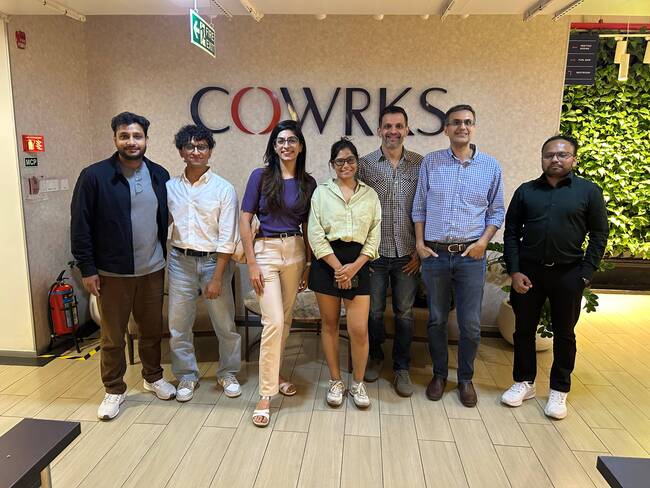
At BonBillo’s Bengaluru Immersion for the India and Southeast Asia Impact Accelerator cohort, Siddharth Ramasubramanian of Hello Tempayy shared how his team turned one such observation into a fast-growing food category.
The insight was simple but powerful: India has a large vegetarian population, yet many consumers struggle to find convenient, affordable, enjoyable sources of protein.
Hello Tempayy did not build its business by asking people to abandon their food culture. It built a product and brand that could fit naturally into it.
That distinction offers a valuable lesson for impact-driven founders: the best products do not merely solve a problem. They understand the beliefs, habits, aspirations, and compromises surrounding the problem.
Lesson One: Build from Structural Change, Not Temporary Hype
Hello Tempayy was founded in 2021 by Siddharth and his wife Malvika, to introduce tempeh into Indian kitchens. Before building the company, Siddharth had spent two decades working across hospitality, casinos, and real estate in the United States, Australia and the UAE. Having contributed to the opening and operations of over 50 successful destination restaurants across the globe during his hospitality career, Siddharth realized how the joy of discovering great food brings people together like nothing else.
Siddharth’s decision to return to India to build Hello Tempayy came from what he described as “seeing around corners.”
He recognized that protein consumption was not simply a passing wellness trend. It was being driven by deeper changes in how young Indians wanted to live. They wanted to look better, feel stronger, exercise more consistently, and take greater control of their health.
That created a structural opportunity.
India is often described through a vegetarian versus non-vegetarian lens. But the more useful consumer insight is that even many non-vegetarian households eat vegetarian food frequently. During the session, Siddharth pointed to a distinction between vegetarian identity and vegetarian meal occasions: while approximately 35% of Indians may identify as vegetarian, close to 70% of meal occasions may be vegetarian.
This creates a significant vegetarian protein gap.
For founders, the broader lesson is to look beyond labels. A market may not self-identify with the category you are building, but its behavior may already indicate demand.
Before committing to an idea, ask:
- What habits are changing beneath the obvious trend?
- Which consumer behaviors are increasing in frequency or intensity?
- What problem becomes more urgent as those behaviors grow?
- Is the opportunity driven by a durable shift or by temporary excitement?
A compelling purpose matters, but durable growth usually comes from solving a problem that is becoming more important over time.
Lesson Two: Understand the Cultural Context Around the Problem
Protein is not a new concern in India. Paneer has long been viewed as the default vegetarian protein source. However, Siddharth observed that paneer is often chosen because of its taste and familiarity - not because consumers are deliberately optimizing for protein.
It can also be relatively high in fat, which creates a challenge for consumers who want convenient, protein-rich food without compromising other health goals.
Hello Tempayy’s founders explored several possible directions, including plant-based meat. But their research suggested that the category was not a natural fit for many Indian consumers.
In India, vegetarianism is not only a dietary choice. It can be cultural, religious, familial, and social. For some consumers, products that resemble meat in appearance, smell, or texture may create resistance rather than excitement.
This was an important strategic insight. A product can be nutritionally sound and globally popular, yet still fail to fit local expectations.
Tempeh offered a different path. It was nutritionally strong, fermented, gut-friendly, and culturally less burdened. It did not ask Indian consumers to imitate meat or redefine their identity. It could simply become another ingredient in familiar meals.
This is a crucial principle for founders entering complex markets: localization is not just changing the language on your packaging. It is understanding what the product means to people.
A product that respects context can often achieve greater adoption than one that simply imports a successful idea from another market.
Lesson Three: Replace Assumptions with Direct Consumer Conversations
Hello Tempayy’s early research was informal but extensive. The team had approximately 200 conversations with people in gyms, stores, restaurants, and homes.
These conversations helped reveal an important contradiction. Even consumers with limited incomes were willing to spend significant amounts on protein shakes and other products they believed would help them become healthier or stronger.
The takeaway was not that every consumer wanted a premium product. It was that aspiration was already present. Consumers were actively searching for ways to improve their health, but the available options were often expensive, inconvenient, or disconnected from everyday meals.
This distinction matters. If the founders had only looked at income levels, they might have concluded that protein was too premium for a large part of the market. By listening to actual behavior and motivation, they identified a more nuanced opportunity.
Customer conversations do not need to be sophisticated to be useful. They do need to be specific.
Instead of asking, “Would you buy a healthier protein product?” ask:
- What did you eat after your last workout?
- What makes it difficult to get enough protein?
- What products have you already paid for?
- What did you dislike about those products?
- Who else influences what you eat at home?
Behavioral questions are often more revealing than opinion-based questions. People may say they want to eat healthier, but their spending, routines, frustrations, and workarounds show what they truly prioritize.
For early-stage founders, 200 conversations can be more valuable than a large but shallow survey. The goal is not to prove that everyone wants your product. The goal is to understand who feels the problem most sharply and why.
Lesson Four: Make the Category Feel Familiar, Aspirational, and Fun
Introducing an unfamiliar food requires more than explaining its nutritional benefits. It requires creating a mental shortcut for consumers.
From the beginning, Hello Tempayy chose to build a fun, premium-looking category. The company did not want tempeh to feel like a niche health product or an obscure imported ingredient.
Even the spelling was part of the strategy. “Tempayy,” written with two y’s, made pronunciation easier and created a more ownable search and category association. During the session, Siddharth noted that approximately 40% of searches use a Tempayy-style spelling.
The company also avoided positioning tempeh primarily as an “Indonesian superfood.” Instead, it localized the product as fermented soy protein that could work across Indian and global cuisines.
That may sound like a small messaging decision, but category language has an outsized impact on adoption. The way a product is described influences whether consumers see it as:
- A difficult ingredient or an easy meal solution
- A niche foreign product or a relevant local option
- A sacrifice for health or an enjoyable everyday choice
- A product for experts or something the whole family can use
For founders creating new categories, branding is not decoration. It is part of the product experience.
Lesson Five: Design the Product Around Real-World Friction
Even when consumers believe in a product’s benefits, adoption can fail if using it feels difficult.
Hello Tempayy’s team discovered that preparation was one of the barriers to trial. Consumers unfamiliar with tempeh could easily overcook it, under-season it, or struggle to incorporate it into their existing meals.
The company responded by pre-cutting the product into cubes. It also introduced marinated variants such as peri-peri, Szechuan, and tawa masala. These flavors reduced unfamiliarity while taking advantage of tempeh’s ability to absorb seasoning.
These decisions illustrate a practical product principle: customers should not need to become experts before they can experience your value.
A product may be technically superior, but if the first-use experience is confusing, customers may never reach the point where they understand its benefits.
Removing one step, clarifying one instruction, or improving one first-use moment can significantly increase conversion and retention.
Lesson Six: Use the Core Ingredient as a Gateway to a Bigger Market
Hello Tempayy initially built the market around tempeh as an ingredient. Over time, the team recognized that ingredient adoption required patient consumer education and repeated behavior change.
The company then expanded into high-protein frozen snacks, using tempeh as a “Trojan horse” ingredient.
Its products include peri-peri, classic, and mighty masala momos, as well as Protein Bhara kebabs and Protein Bhara parathas.
The shift produced a powerful result: the momo range achieved in approximately seven months what the ingredient products had taken roughly three and a half years to build.
Sometimes the fastest path to behavior change is not asking customers to learn something entirely new. It is embedding the new solution inside something they already love.
What Founders Can Learn from Hello Tempayy’s Growth
Start with a deep insight. The opportunity was not simply “sell plant-based food.” It was the intersection of vegetarian meal occasions, rising health aspirations, and a shortage of convenient protein options
Tell a big opportunity story authentically. Investors and partners need to understand why the market matters and why the founders are the right people to build it. Siddharth’s message was clear: founders must first believe in the opportunity themselves. Investors buy conviction, but conviction needs to be supported by credibility and evidence.
Hire people who believe in the mission. Building a new category requires patience. The team must be willing to educate the market, listen to criticism, test repeatedly, and continue when the results are not immediate.
Be optimistic in creation and pessimistic in planning. The act of building requires belief. The act of planning requires realism about capital, timelines, operational challenges, and customer behavior.
Remember that startups are a stamina game. Growth is rarely the result of one brilliant decision. It is usually the cumulative result of thousands of decisions sustained over time.
Closing: Build for the Future Customers Are Already Moving Toward
Hello Tempayy’s journey is a reminder that category creation begins with observation.
The founders saw that Indian consumers were becoming more health-conscious, but did not assume that a global plant-based food model would automatically work in India. They listened, tested, adapted, simplified, branded, and eventually found formats that made the underlying innovation easier to adopt.
That is what “seeing around corners” looks like in practice.
It is not predicting the future perfectly. It is noticing the early signals, understanding the people behind them, and building with enough conviction to move before the market is fully formed.
The future may begin with a new ingredient, a new technology, or a new way of solving an old problem. The founders who succeed will be the ones who make that future feel accessible, and worth choosing today.