
How to move from a promising idea to a fundable startup by speaking the language of investors.
As a founder, you live and breathe your startup. But when it's time to raise capital, how do you translate that passion into a story that investors will back? The fundraising landscape can feel like a maze of confusing terms, unspoken rules, and conflicting advice. You're left wondering: "Are we ready? What do investors really want to see?"
This isn't just about having a polished pitch deck. It's about understanding your startup's stage of development with objective clarity and communicating your progress in a language that resonates with investors. Without a common framework, you're essentially speaking a different language, leading to missed opportunities and frustrating "no's."
To bridge this gap, we hosted a workshop for our BonBillo community with Julia Turnbull, Associate Director at MIT Sloan Executive Education. Julia shared a powerful tool designed to bring clarity to this process: Village Capital's VIRAL framework. This framework isn't just another checklist; it's a comprehensive roadmap that helps you self-assess your startup's maturity, identify your next milestones, and build a compelling case for investment.
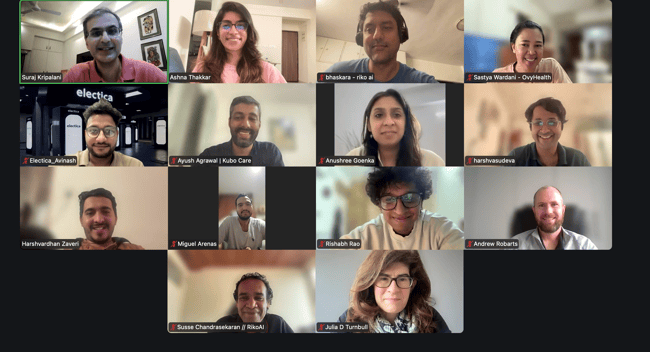
Let's dive into the key takeaways from the session and learn how you can use the VIRAL framework to navigate your fundraising journey with confidence.
What is Investor Readiness, really?
Before diving into the framework, Julia reminded us that investor readiness is fundamentally about relationships. This means your job isn't just to present data, but to build trust over time. Investors are looking for founders who understand their mission and can tell a story about how their venture aligns with the investor's own goals. This process takes time - Julia noted that closing a round can take 3 to 6 months in the U.S, and sometimes even longer in emerging markets. The key is to start building those relationships long before you need the capital.
But how do you structure those conversations? How do you track your progress in a way that makes sense to both you and a potential investor? That's where the VIRAL framework comes in.
The VIRAL framework: Your startup's GPS
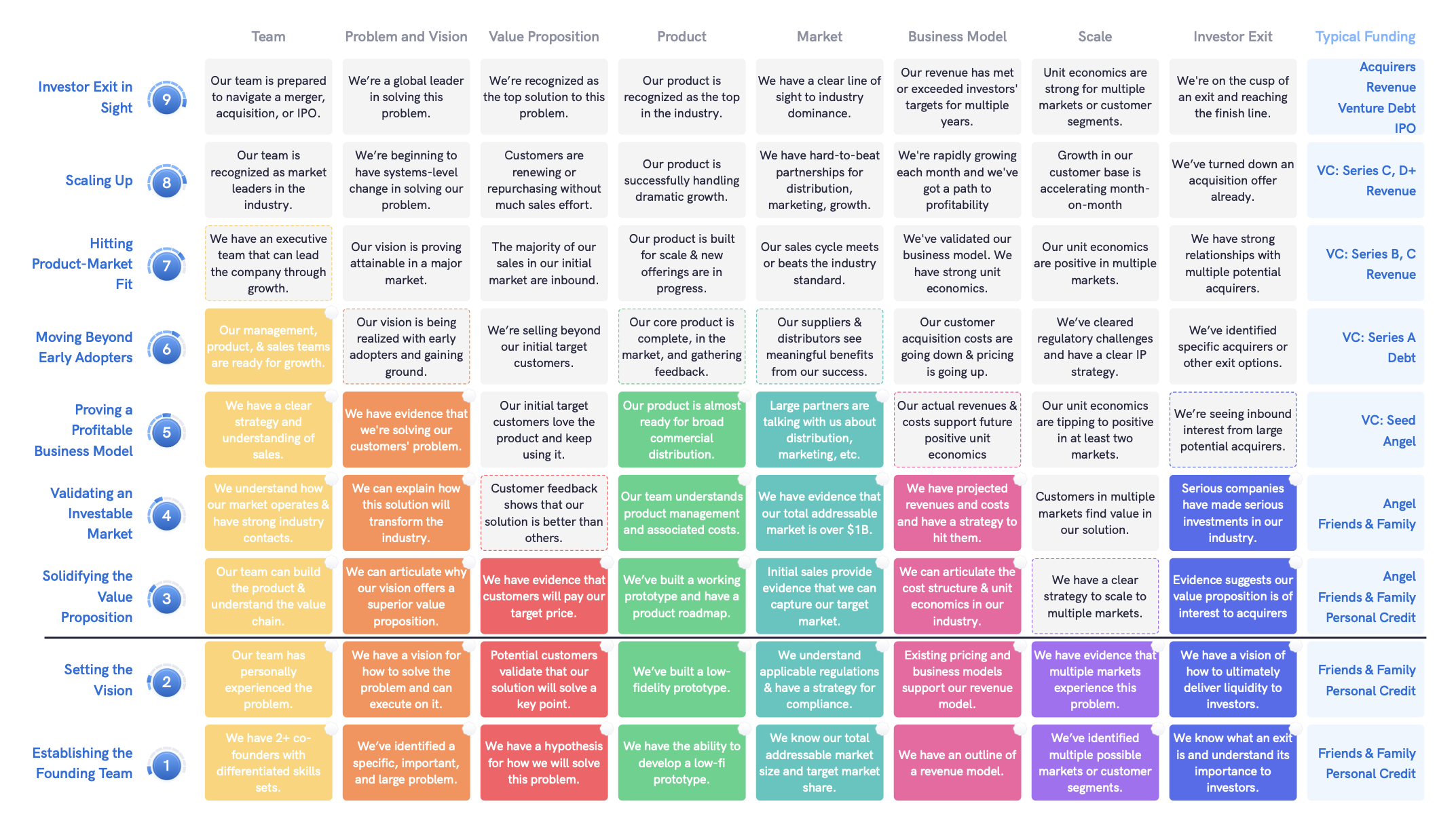
Developed by Ross Baird of Village Capital, the VIRAL (Venture Investment-Readiness and Awareness Levels) framework was created to be a "bridge between what you as an entrepreneur are presenting to an investor and how the investor is evaluating your venture." Inspired by NASA's Technology Readiness Levels (TRL), which brought clarity to the complex process of space exploration, VIRAL provides a standardized language for assessing a startup's progress across eight key categories. It breaks down the journey from idea to scale into nine distinct levels, helping you pinpoint exactly where you are and what you need to do to get to the next stage.
Why use a framework like VIRAL?
For early-stage founders, the VIRAL framework is more than just a set of milestones. It’s a strategic tool that provides:
- Objective Self-Assessment: It forces you to look at your startup through an investor's eyes, moving beyond passion to a data-driven evaluation of your progress.
- A Common Language: It gives you a shared vocabulary to discuss your startup's maturity with investors, mentors, and your own team, ensuring everyone is on the same page.
- Strategic Clarity: The framework helps you identify your "jagged profile"—the areas where you're strong and the ones where you're lagging. For example, you might have a Level 6 Team but a Level 3 Value Proposition. This isn't a failure; it's a clear signal of where to focus your efforts next.
- A Clear Roadmap: By pinpointing your current level in each category, VIRAL provides a concrete roadmap of the milestones you need to hit to become "fundable" at the next stage.
A deep dive into the VIRAL Levels (1-7)
The VIRAL framework maps your journey from a concept to a scalable business. While there are nine levels in total, the first seven are critical for moving from idea to product-market fit and initial scale. Julia emphasized that you might be at different levels in different categories simultaneously. The framework helps you identify and address these gaps.
The VIRAL Roadmap
|
Level |
What Investors Look For |
Typical Funding |
|
|
Level 1: Establishing the Founding Team |
Do you have a complementary team? Are founder agreements clear? Investors want to see a team that can stick together through challenges. |
Bootstrapping, Friends & Family |
|
|
Level 2: Setting the Vision |
Have you clearly articulated your mission and the specific problem you're solving? Have you done initial market segmentation and started to understand customer pain points? |
Grants, Accelerators |
|
|
Level 3: Solidifying the Value Proposition |
Have you built a prototype or run a pilot? Are you getting evidence that customers will pay for your solution? This is where you move from theory to tangible proof. |
Angel Investors, Pre-Seed Funds |
|
|
Level 4: Validating an Investable Market |
Can you show evidence of a $1B+ total addressable market (TAM)? For founders in smaller markets, this means having a clear story for regional or global expansion. |
Seed Funds, Early-Stage VCs |
|
|
Level 5: Proving a Profitable Business Model |
Are your actual revenues and costs on track to hit positive unit economics? Do you have a clear LTV:CAC ratio? |
VC: Seed, Angel |
|
|
Level 6: Moving Beyond Early Adopters |
Is your core product complete and gathering strong feedback? Are customer acquisition costs going down and pricing power going up? |
VC: Series A, Debt |
|
|
Level 7: Hitting Product-Market Fit |
Is your business model validated with strong unit economics? Are you seeing accelerating month-on-month growth? |
VC: Series B, C, Revenue |
|
The VIRAL Framework in Action: A Case Study with a B2B fintech startup
Theory is one thing, but seeing the framework in action is where its power becomes clear. A B2B fintech completed the VIRAL assessment to get an objective snapshot of their progress. The result was a classic "jagged profile," which immediately highlighted their strengths and, more importantly, their next critical milestones.
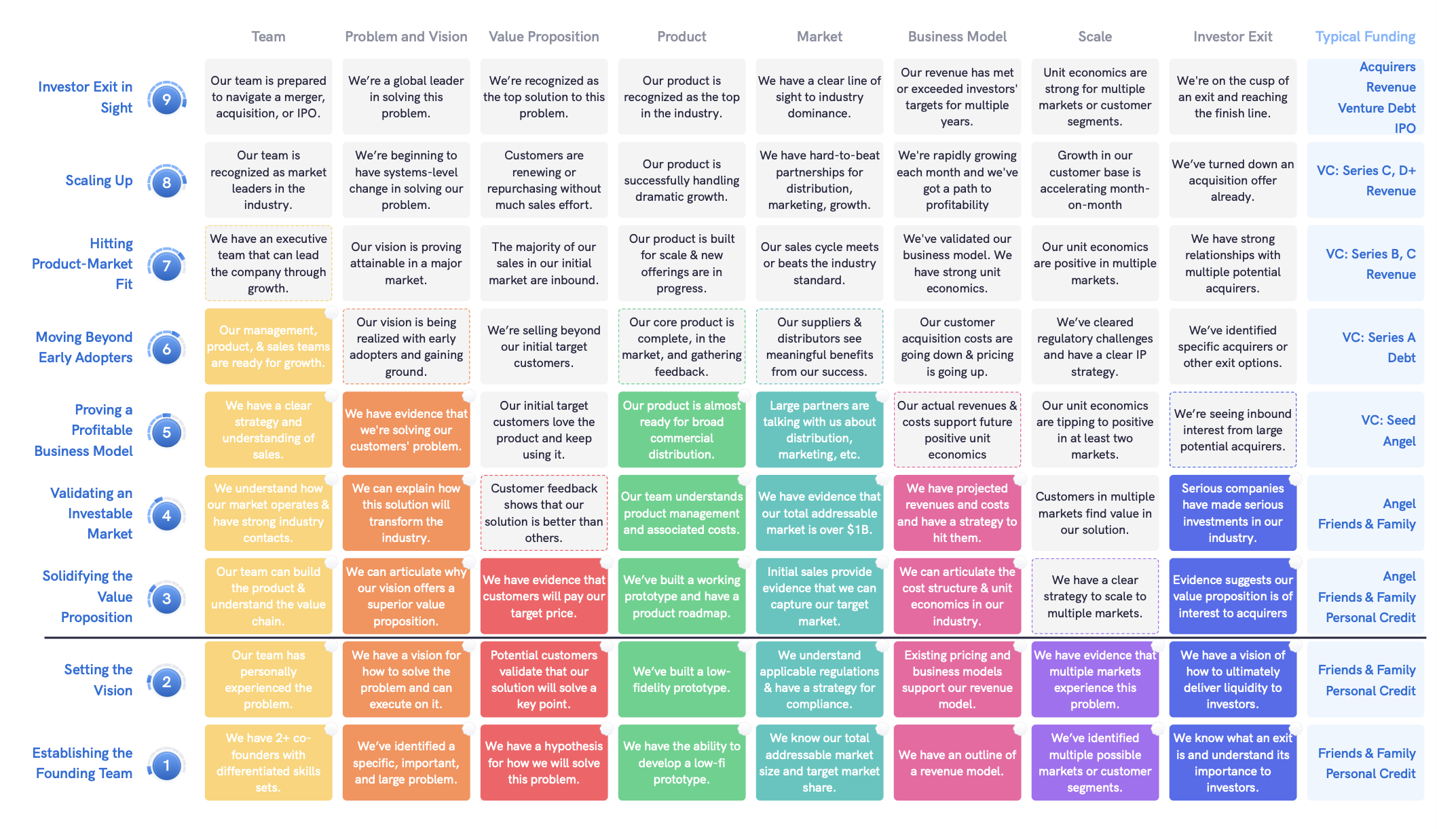
As you can see, the startup has a strong team (Level 6) and a clear vision (Level 5), but there are gaps in areas like Value Proposition (Level 3) and Business Model (Level 4). This isn't a sign of weakness; it's a strategic roadmap.
Here are a few key takeaways from our session with the team:
- Value Proposition (Level 3 → 4): The team had paying customers, which validated Level 3 (evidence that customers will pay). However, to reach Level 4, they needed to prove their solution was demonstrably better than competitors. The Next Milestone: "We need to gather quantitative feedback—surveys, NPS scores, and testimonials—to prove we are 10x better and move to Level 4." This shifted their focus from just selling to systematically collecting proof.
- Product (Level 5): The tech vision was for a highly advanced, agentic AI workflow. However, the current product was already at parity with competitors and delivering value. The key insight was that you don't need the final vision to be built to go to market. The Next Milestone: "Focus on distributing our stable, robust MVP to grow our customer base now, while continuing to build advanced features in parallel." This prevented them from getting stuck in a perpetual build-trap.
- Business Model (Level 4 → 5): The startup has strong financial projections (Level 4), but to convince investors, they needed to prove the underlying unit economics. The Next Milestone: "Build out a clear LTV:CAC model. Even with early data, a thoughtful model shows we understand the levers of a profitable business and gets us to Level 5."
By the end of the session, the team didn't just have a score; they had a prioritized action plan, perfectly aligned with what their next round of investors would want to see.
The Seed Gradient: A deeper look at early-stage funding
To add another layer of clarity, Julia introduced the "Seed Gradient," a concept from Parul Singh, a Partner at 645 Ventures. This breaks down the often-confusing "seed" stage into more specific milestones, helping you understand what investors expect at each step. We've updated the typical round size to be more current for 2026.
The Seed Gradient
|
Stage |
Typical Monthly Revenue |
Typical Round Size |
Investor Type |
|
Pre-Seed |
$0 - $25k |
$250k - $750k |
Accelerators, Angels, Pre-Seed Funds |
|
Seed |
$25k - $150k |
$1M - $5M |
Seed Funds, Micro-VCs |
|
Seed Plus |
$150k- $200k |
$2M - $5M |
Seed Funds, Early-Stage VCs |
This gradient provides clear benchmarks. By knowing where you stand, you can target the right investors with the right ask, dramatically increasing your chances of success. Read more on raising seed capital on Parul's blog.
Navigating the investor meeting: Key Do's and Don'ts
Once you get the meeting, how you handle the conversation is critical. Julia shared some practical, in-the-trenches advice:
- Don't reveal which other investors you've met with. While it's tempting to name-drop, this can backfire. Investors may talk to each other and align on terms that are less favorable to you. It's better to say, "We're talking with a handful of interested people."
- Be prepared to talk about your team. Investors care deeply about the founding team's dynamics, experience, and commitment.
- Be transparent about potential issues. If there are skeletons in the closet - like a co-founder who left or an IP issue - it's better to address them strategically than to have them discovered during due diligence.
The goal is to build a relationship based on trust and transparency, showing that you're a credible and reliable operator.
Your action plan: Set your next milestones
Investor readiness isn't a one-time event; it's a continuous process of building, measuring, and communicating. The VIRAL framework provides the structure you need to turn this messy journey into a series of clear, achievable milestones.
Just as the B2B fintech startup identified their next steps, take a moment to assess your own startup. Where do you fall on the VIRAL framework today? Where do you want to be in three to six months? By setting clear goals based on this framework, you can focus your team's efforts, track your progress, and walk into your next investor meeting with the data and the story to back up your vision.
The path to funding is challenging, but with the right map, you can navigate it with purpose and clarity. Use the VIRAL framework as your guide, and you'll be well on your way to securing the resources you need to make your impact on the world.
Ready to assess your startup's stage and set your next milestones? Take 10 minutes to complete your VIRAL Assessment and get a clearer picture of where your startup stands today, what investors will expect next, and the milestones that matter most for your growth.